Disclaimer: This article is intended solely for informational and educational purposes only. It does not constitute medical advice.
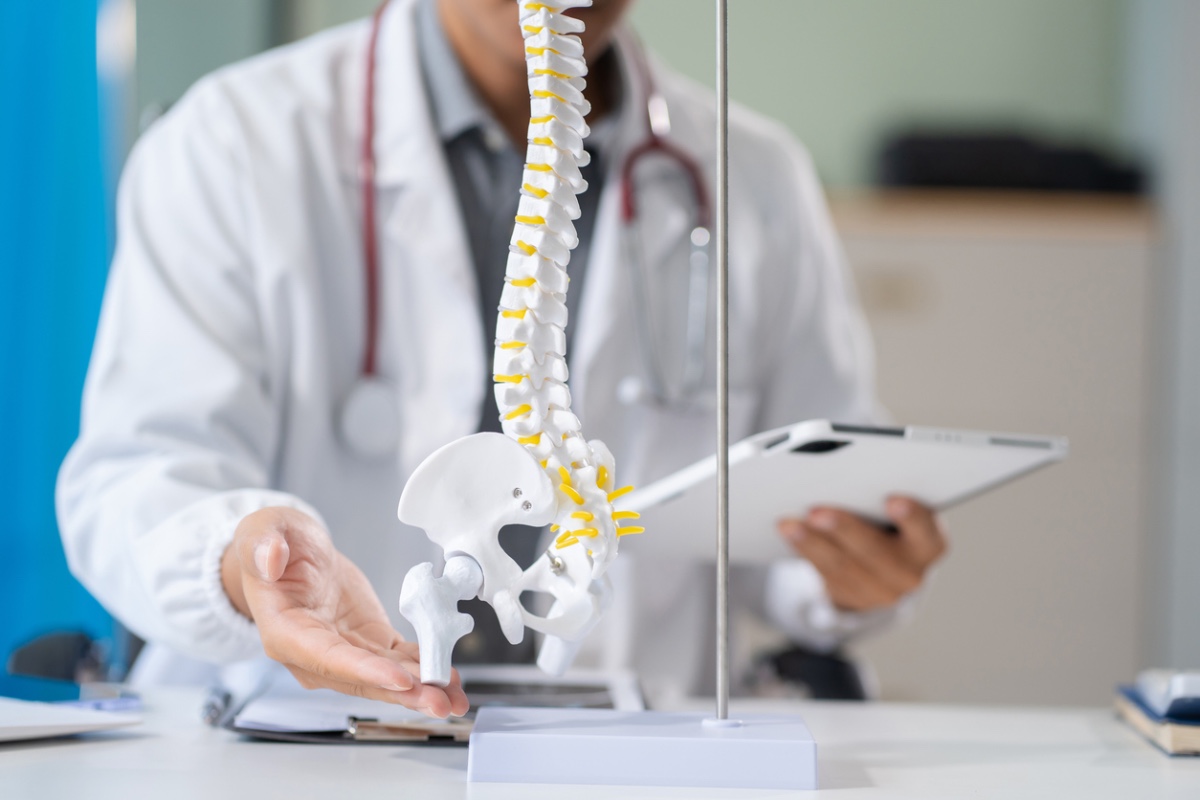
Hip and knee pain are often thought of as local problems. If a patient is experiencing knee pain, it is natural to assume something is wrong with the knee, and likewise for the hip. In many cases, the joint itself is indeed the source of pain. However, pain in the hip or knee can also be influenced by the spine, especially the lower back.
The nerves that travel from the lower spine supply sensation and muscle control to the hips, thighs, knees, and lower legs. When one of these nerves becomes irritated or compressed, pain can be felt farther away from the spine. This is known as referred pain or, in some cases, radicular pain. A person may notice discomfort in the hip, front of the thigh, or around the knee even when the main source of irritation is in the lower back.
This can happen for several reasons. Age-related changes in the spine, such as disc degeneration or narrowing around the spinal nerves, may contribute. A bulging or herniated disc can also irritate a nearby nerve. In other cases, stiffness or dysfunction in the joints and muscles of the lower back may alter how a person moves, placing additional stress on the hips or knees over time.
One clue that the spine may be involved is when hip or knee pain changes noticeably with movements of the lower back. For example, sitting, bending, standing, or walking for a certain amount of time may make the symptoms better or worse. Some people also experience numbness, tingling, burning, or weakness in the leg. Pain that travels from the back or buttock into the thigh or below the knee can also suggest nerve involvement.
At the same time, not every case of hip or knee pain comes from the spine. Arthritis, tendon irritation, bursitis, muscle strains, ligament injuries, and other joint-related conditions are common. It is also possible for more than one issue to be present at the same time. Someone may have mild knee arthritis along with a lower-back problem that increases the amount of discomfort they feel.
Because symptoms of different musculoskeletal conditions can overlap, a thorough evaluation is important to determine the root cause or causes of hip or knee pain so that patients can receive appropriate care, whether it is for the hip, knee, spine, or a combination. A healthcare professional may examine the way the lower back, hips, and knees move, test strength and reflexes, and check for changes in sensation. The goal is to determine whether the symptoms are coming mainly from the joint, the spine, surrounding soft tissues, or a combination of factors.
Chiropractic care may be one part of a conservative approach when musculoskeletal or spinal factors are contributing to symptoms. Depending on the situation, care may include spinal or joint mobilization, exercises, stretching, and guidance on movement and posture. The appropriate approach depends on the underlying cause, the person’s health history, and the findings of the examination.
Certain symptoms require prompt medical attention. New bowel or bladder problems, significant leg weakness, numbness in the groin area, fever, unexplained weight loss, or severe pain following a major injury should be evaluated right away.
Pain does not always begin where it is felt. Looking at the spine along with the surrounding joints, muscles, and nerves can provide a more complete picture and help guide appropriate care when treating musculoskeletal conditions such as hip or knee pain.