April 17, 2026 | Urban Chiropractic April 17, 2026 | Urban Chiropractic

Episode 9 – Can Keto Improve Depression? The Science Behind Brain Energy, Inflammation, and Mental Health

Overview:
What if depression isn’t just a chemical imbalance—but an energy problem in the brain?

In this deep dive, the episode explores how a ketogenic diet is reshaping the conversation around mental health. Instead of focusing solely on neurotransmitters like serotonin and dopamine, this discussion looks at how the brain is fueled—and what happens when that fuel source changes.

Using new research from Ohio State, the episode examines how shifting from glucose to ketones impacts brain function, inflammation, and mood. Participants who added a ketogenic diet to their existing treatment saw significant improvements in depressive symptoms, cognitive clarity, and overall energy. The conversation breaks down why: stable brain energy, reduced inflammation, improved neuroplasticity, and a recalibrated gut-brain connection.

At the same time, it addresses the limitations—small sample size, difficulty maintaining the diet, and the importance of using nutrition as a complement, not a replacement, for medical treatment.

(00:00) Rethinking Depression Beyond Brain Chemistry

  • Traditional treatment focuses on neurotransmitters and mental processing
  • Introduces the idea that depression may be linked to how the brain is fueled
  • Shifts the perspective from chemical imbalance to metabolic function

(00:29) The Ohio State Study on Keto and Depression

  • Pilot study tracked individuals with major depressive disorder over 10–12 weeks
  • Participants maintained existing treatments while adding a ketogenic diet
  • Demonstrated significant reductions in depressive symptoms

(00:58) Results: Mood, Focus, and Energy Improvements

  • Participants reported major improvements in mood and daily functioning
  • Clinical assessments confirmed reduced depression severity
  • Cognitive clarity and focus also improved

(01:28) How Keto Changes the Body’s Fuel Source

  • Shifts energy production from glucose to ketones
  • Reduces reliance on carbohydrates and sugar
  • Creates a different metabolic environment for the brain

(01:54) The Problem with Glucose-Based Energy

  • High-carb intake causes spikes and crashes in blood sugar
  • Leads to inconsistent energy levels and mental fatigue
  • Exacerbates symptoms like brain fog and mood instability

(02:23) Ketones as a Stable Brain Fuel

  • Provide steady, consistent energy without insulin spikes
  • Improve baseline brain function and reduce fatigue
  • Help stabilize mood by eliminating energy fluctuations

(02:52) Inflammation and Its Role in Depression

  • Chronic inflammation disrupts neurotransmitter production
  • Linked to severity and persistence of depressive symptoms
  • Acts as a hidden driver behind mental health conditions

(03:22) How Ketones Reduce Brain Inflammation

  • Ketone bodies actively suppress inflammatory pathways
  • Lower production of cytokines that affect brain function
  • Create a calmer, more stable neurological environment

(03:51) Neuroplasticity and Brain Repair

  • Ketogenic state increases BDNF, supporting neuron growth
  • Helps rebuild damaged neural pathways caused by depression
  • Enhances the brain’s ability to adapt and recover

(04:15) The Gut-Brain Connection

  • Diet directly influences gut bacteria and neurotransmitter production
  • Poor diet leads to imbalance and negative brain signaling
  • Keto supports a healthier microbiome and improved communication

(04:42) Limitations and Practical Challenges

  • Study size is small and results are short-term
  • Strict dietary adherence is difficult to maintain
  • Requires medical supervision and should not replace existing treatment

(End) A New Perspective on Mental Health

  • Mental health and metabolic health are deeply interconnected
  • Nutrition plays a direct role in brain function and mood
  • Raises the question of whether modern diets disrupt optimal brain performance

Episode 8 – Why You’re Losing Hair on Ozempic: The Real Link Between Rapid Weight Loss, Nutrient Deficiency, and Shedding

Overview:
What if the side effect no one warned you about isn’t caused by the drug—but by how your body reacts to it?

In this deep dive, the episode unpacks why people taking GLP-1 medications like Ozempic and Wegovy are experiencing sudden, often alarming hair loss—despite improved weight, blood sugar, and overall health markers. The discussion moves beyond surface-level explanations and breaks down the two core drivers: the biological shock of rapid weight loss and the hidden nutritional deficiencies caused by suppressed appetite.

From the hair growth cycle and telogen effluvium to the role of protein, iron, zinc, and vitamin D, this episode explains how the body prioritizes survival over “non-essential” functions like hair growth. It also addresses why this side effect doesn’t appear on official drug labels, the delayed timeline that confuses patients, and what actually needs to be done to reverse the process.

This is not about stopping the medication—but about understanding the underlying biology and taking control of nourishment, recovery, and long-term health.

(00:00) The Hidden Side Effect No One Expects

  • Patients experience hair loss despite successful weight loss and improved health
  • Creates confusion because the medication appears to be working correctly
  • Highlights the disconnect between metabolic benefits and visible side effects

(00:30) Why GLP-1 Medications Change the Body So Drastically

  • Drugs like Ozempic mimic hormones that regulate blood sugar and appetite
  • Slow gastric emptying and suppress hunger signals in the brain
  • Lead to rapid caloric reduction and significant weight loss

(00:55) Why Hair Loss Isn’t Listed as a Side Effect

  • Clinical trials focus on direct drug effects, not secondary biological responses
  • Hair loss is not caused by the drug attacking follicles directly
  • Instead, it results from systemic changes in the body

(01:23) The Shock of Rapid Weight Loss (Telogen Effluvium)

  • Sudden weight loss triggers a stress response in the body
  • Hair follicles are pushed from growth phase into resting phase
  • Can affect up to 30–50% of active hair follicles

(01:53) How the Hair Growth Cycle Gets Disrupted

  • Hair cycles between growth (anagen) and resting (telogen) phases
  • Rapid metabolic changes force premature transition to shedding phase
  • Results in noticeable hair loss months after the initial trigger

(02:23) The Delayed Timeline That Confuses Patients

  • Hair shedding occurs 2–3 months after the initial metabolic stress
  • Patients often misattribute the cause to recent changes
  • Creates difficulty in identifying the true trigger

(02:52) Nutrient Deficiencies from Appetite Suppression

  • Reduced food intake leads to lower protein, vitamin, and mineral levels
  • Hair follicles lack the building blocks needed for growth
  • Creates a second layer of stress on the hair cycle

(03:22) Critical Nutrients for Hair Growth

  • Protein provides amino acids required for keratin production
  • Iron supports oxygen delivery to hair follicles
  • Zinc and vitamin D regulate cell division and follicle function

(03:51) Absorption Issues from Slowed Digestion

  • Delayed gastric emptying may reduce nutrient absorption efficiency
  • Even consumed nutrients may not be fully utilized
  • Compounds the effects of reduced intake

(04:15) Why Some People Are More Affected Than Others

  • Pre-existing deficiencies or health conditions increase vulnerability
  • Individuals with borderline nutrient levels are more likely to experience severe shedding
  • Highlights the importance of baseline health before treatment

(04:46) Is the Hair Loss Permanent?

  • Telogen effluvium is typically temporary and reversible
  • Hair regrowth occurs once the body stabilizes
  • Requires addressing underlying nutritional and metabolic factors

(05:14) How to Stop and Reverse Hair Loss

  • Medical evaluation and blood work are essential to identify deficiencies
  • Targeted nutrition and supplementation help restore balance
  • Strategic eating becomes necessary due to reduced appetite

(05:43) Treatment Options and Regrowth Support

  • Topical treatments like minoxidil can stimulate hair regrowth
  • May initially increase shedding as new growth replaces old hair
  • Requires consistency and patience for visible results

(06:10) The Reality of Recovery Timeline

  • Hair regrowth takes several months due to natural growth cycles
  • Immediate results are not possible due to biological constraints
  • Managing expectations is critical to avoid unnecessary stress

(06:37) Rethinking Hunger and Body Signals

  • Appetite is a biological communication system, not an obstacle
  • Suppressing hunger requires intentional nutrient replacement
  • Long-term health depends on supporting the body’s underlying needs

Read more on our blog: Ozempic and Hair Loss | Urban Chiropractic

Episode 7 – Dopamine Detox or Digital Reset? How Constant Stimulation Is Rewiring Your Brain and Killing Focus

Overview:
What if the reason you can’t focus, sit still, or feel satisfied anymore isn’t a lack of discipline—but overstimulation?

In this deep dive, the episode unpacks the modern phenomenon often called a “dopamine detox,” cutting through the buzzword to reveal what’s actually happening inside the brain. It explores how constant digital input—social media, notifications, short-form content—keeps your brain’s reward system firing at unnatural levels, forcing it to adapt by reducing its own sensitivity.

The result is a subtle but powerful shift: everyday activities start to feel boring, attention becomes fragmented, and mental fatigue sets in. Instead of framing this as a chemical “detox,” the episode reframes it as a behavioral reset—one that gives your brain the quiet space it needs to recover.

Through a practical 24-hour blueprint, the conversation outlines how to step away from high-stimulation habits, rebuild focus, and restore the ability to find satisfaction in slower, real-world experiences.

(00:00) The Disappearance of Boredom

  • Everyday idle moments have been replaced by automatic phone use and constant stimulation
  • Even brief downtime triggers an unconscious reflex to seek digital input
  • The “in-between” moments of life have effectively been eliminated

(00:29) Always-On Attention and Digital Overload

  • Social media, notifications, and content streams fill every gap in attention
  • Algorithms are designed to deliver continuous, high-density stimulation
  • Leads to mental fatigue, distraction, and emotional overstimulation

(00:52) Why People Feel Mentally Drained

  • Constant input pushes the brain beyond what it was designed to handle
  • Results in scattered thinking, reactivity, and exhaustion
  • Mental burnout becomes a defensive response to overstimulation

(01:21) Dopamine and the Reward System

  • Dopamine drives motivation, reward, and anticipation
  • Modern technology exploits this pathway through variable rewards and infinite scroll
  • Keeps the brain in a constant state of stimulation

(01:51) The Myth of a “Dopamine Detox”

  • Dopamine is essential for normal brain function and cannot be eliminated
  • The concept is often misunderstood as a chemical cleanse
  • The real issue is overstimulation, not the presence of dopamine

(02:18) Downregulation and Loss of Sensitivity

  • The brain reduces dopamine receptor sensitivity to protect itself
  • Everyday activities feel less rewarding as a result
  • Higher levels of stimulation are required to feel engaged

(02:48) What a “Detox” Actually Does

  • Not a chemical reset, but a behavioral break from high-stimulation inputs
  • Allows dopamine receptors to recover sensitivity over time
  • Creates the conditions for focus and clarity to return

(03:15) The 24-Hour Reset Blueprint

  • Commit to a one-day break from high-stimulation activities
  • Avoid social media, binge content, gaming, and impulsive snacking
  • Focus on creating a low-tech, intentional day

(03:44) Replacing Stimulation with Intentional Activities

  • Engage in journaling, reading, cooking, walking, or quiet reflection
  • Shift from passive consumption to active attention
  • Retrains the brain to tolerate slower, real-world pacing

(04:13) Why It Feels Uncomfortable at First

  • Initial boredom and restlessness are signs of overstimulated brain patterns
  • Discomfort reflects the brain recalibrating its reward system
  • Pushing through is necessary for recovery

(04:43) Immediate Benefits After One Day

  • Reduced mental clutter and improved clarity
  • Lower emotional reactivity and increased sense of control
  • Time feels more expansive without constant distraction

(05:13) Long-Term Impact on Focus and Stress

  • Reduces cortisol levels and chronic stress from constant input
  • Improves sleep by removing overstimulation before rest
  • Restores ability to sustain deep focus on single tasks

(05:41) Rediscovering Simple Activities

  • Everyday actions like cooking or walking become enjoyable again
  • Lower stimulation threshold allows subtle experiences to feel rewarding
  • Highlights how overstimulation dulls real-world satisfaction

(06:08) Reclaiming Control Over Attention

  • The practice is about managing exposure to stimulation, not eliminating dopamine
  • Encourages intentional use of technology rather than passive consumption
  • Positions attention as a resource that must be actively protected

Read more from our blog: Dopamine Detox: Why Taking a Break From Constant Stimulation Actually Works | Urban Chiropractic

Episode 6 – Melatonin and Heart Health: Hidden Risks, Sleep Benefits, and What the Latest Research Really Says

Overview:
What if the supplement millions rely on for sleep is quietly doing more than just helping you rest?

In this debate-style deep dive, the episode examines new findings linking long-term melatonin use to potential cardiovascular risks, including increased chances of heart failure. But the conversation goes deeper—questioning whether melatonin itself is the problem, or if chronic sleep deprivation is the real driver behind these outcomes.

The discussion breaks down how melatonin functions as a hormone that regulates your circadian rhythm, not just a simple sleep aid. It explores how high or inconsistent doses—especially from poorly regulated supplements—can disrupt blood pressure patterns and strain the cardiovascular system over time. At the same time, it challenges the data, emphasizing the lack of proven causation and the role of underlying insomnia.

This episode ultimately reframes melatonin as a tool—not a solution—raising the question of whether it supports recovery or masks deeper issues with sleep, stress, and lifestyle.

(00:00) Melatonin as a “Quick Fix” for Sleep

  • Compares melatonin use to covering a warning light instead of fixing the issue
  • Highlights widespread reliance on supplements for sleep
  • Introduces concerns around long-term use and underlying health risks

(00:26) The Debate: Risk vs Reassurance

  • One side argues melatonin poses serious cardiovascular risks
  • The other emphasizes lack of causal evidence and warns against overreaction
  • Frames the discussion as risk interpretation vs scientific uncertainty

(00:55) The Study Linking Melatonin to Heart Failure

  • Long-term users showed significantly higher rates of heart failure and hospitalization
  • Raises concerns about chronic reliance on the supplement
  • Positions melatonin as more than a harmless sleep aid

(01:24) Melatonin as a Hormonal Signal

  • Functions as a chronobiological regulator, not just a sleep trigger
  • High doses can disrupt natural circadian signaling
  • Alters blood pressure patterns and vascular behavior

(01:53) The Causation Problem

  • Observational data cannot confirm melatonin as the direct cause
  • Chronic insomnia itself is known to damage cardiovascular health
  • Raises possibility that melatonin users are already high-risk individuals

(02:20) The Impact of Sleep Deprivation on the Body

  • Lack of sleep increases cortisol and adrenaline levels
  • Keeps the body in a prolonged stress response
  • Directly contributes to elevated blood pressure and heart strain

(02:49) Dosage and Supplement Regulation Issues

  • Supplements are loosely regulated, leading to inconsistent dosing
  • Actual content may exceed labeled dosage significantly
  • Creates unpredictable hormonal effects on the body

(03:19) Long-Term Use and Accumulated Risk

  • Repeated hormonal disruption may compound cardiovascular strain
  • Daily use can lead to dependence rather than resolution
  • Raises concerns about using melatonin as a long-term solution

(03:49) Short-Term Use vs Dependency

  • Can serve as a temporary tool for sleep disruptions
  • Risk emerges when short-term use becomes habitual
  • Highlights the importance of addressing root causes of insomnia

(04:17) Masking the Root Cause of Sleep Issues

  • Reliance on supplements may prevent lifestyle changes
  • Does not address stress, screen exposure, or circadian disruption
  • Frames melatonin as symptom management rather than treatment

(04:42) The Unresolved Question

  • No definitive conclusion on melatonin’s direct risk
  • Emphasizes need for further research and better regulation
  • Leaves the listener to evaluate whether they are treating the cause or the symptom

Episode 5 – AI Fitness Coaching Explained: How Smart Trainers Use Data, Form Tracking, and Recovery Metrics

Overview:
What if your workouts weren’t based on guesswork—but on real-time data about your body?

In this deep dive, the episode breaks down how AI-powered fitness coaching is transforming the way people train, recover, and improve performance. Moving far beyond basic workout apps, these systems use computer vision to track your movement, wearables to monitor your recovery, and adaptive algorithms to adjust your training in real time.

The conversation walks through how AI can act as a constant set of eyes—correcting form, preventing injury, and optimizing workouts based on metrics like heart rate variability. But it also draws a clear boundary: while AI delivers precision and efficiency, it still lacks the emotional intelligence, motivation, and human context that traditional coaching provides. The result is a shift toward hybrid fitness models, where technology handles performance data and humans provide the connection.

(00:00) Real-Time Form Coaching with AI

  • AI fitness apps actively monitor your body position during exercises, not just track time or reps
  • Instant voice feedback corrects posture mid-exercise, improving form and reducing injury risk
  • The experience shifts from passive tracking to active coaching in real time

(00:28) AI vs Traditional Fitness Apps

  • Standard workout apps rely on static routines and timers with no real feedback
  • AI coaching introduces dynamic, interactive guidance tailored to the individual
  • The shift represents a move from generic programming to personalized training

(00:59) Computer Vision and Motion Tracking

  • AI maps key joint positions like shoulders, hips, and knees to build a real-time body model
  • Movement is analyzed in 3D to assess alignment, range of motion, and technique
  • This allows precise detection of form breakdown during exercises

(01:27) Augmented Feedback and Posture Correction

  • Voice cues and visual overlays guide users to adjust movement instantly
  • Real-time corrections improve efficiency and reduce long-term injury risk
  • The system acts like a virtual trainer providing constant technical feedback

(01:53) Accessibility and Adaptive Training

  • AI enables effective workouts anywhere, from home to travel environments
  • Training adjusts based on fatigue and performance during the session
  • The system evolves with the user, learning patterns over time

(02:22) Wearable Integration and Data Tracking

  • AI connects with devices like Apple Watch, WHOOP, and Oura Ring
  • Continuous data collection enhances training accuracy and personalization
  • Workouts are informed by real physiological signals, not assumptions

(02:49) Heart Rate Variability and Recovery Optimization

  • HRV provides insight into stress levels and nervous system recovery
  • AI uses this data to determine readiness for intensity or recovery sessions
  • Training becomes aligned with the body’s current state rather than a fixed schedule

(03:15) Eliminating Guesswork in Training

  • AI replaces trial-and-error programming with data-driven decision making
  • Workouts are automatically adjusted to match performance capacity
  • This leads to more efficient progress and reduced risk of overtraining

(03:41) Limitations of AI Coaching

  • AI cannot interpret emotional state or psychological fatigue
  • It lacks the ability to provide motivation, empathy, or accountability
  • Data-driven recommendations may not align with real-life context

(04:11) Hybrid Fitness Models

  • Gyms are combining AI analytics with human trainers
  • AI handles performance tracking while humans provide guidance and support
  • This approach balances precision with emotional and behavioral coaching

(04:38) The Future of Fitness Technology

  • AI is positioned as a tool to enhance—not replace—human coaching
  • The integration of data and human insight creates a more complete training system
  • Long-term success depends on combining both elements effectively

(05:00) The Trade-Off of Data-Driven Fitness

  • Fully optimized training may reduce spontaneity and enjoyment
  • Fitness risks becoming overly calculated and performance-focused
  • The balance between data and human experience becomes a key question moving forward

Read more from our blog: The Rise of the AI Physical Trainer: Personalized Fitness for the Digital Age | Urban Chiropractic

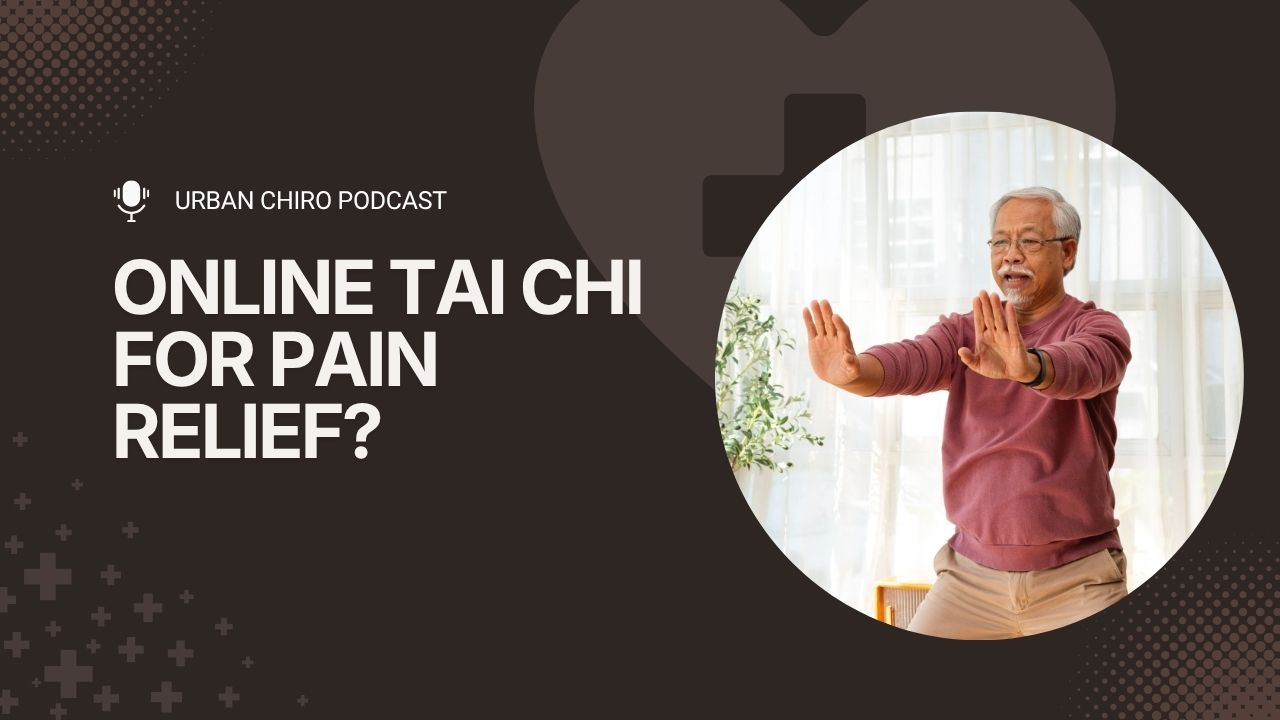
Episode 3 – Tai Chi for Knee Pain Relief: How At-Home Movement Therapy Improves Osteoarthritis Without Medication

Overview:
What if meaningful joint pain relief didn’t require medication, surgery, or even a clinic visit?

In this deep dive, the episode explores new clinical research on using video-guided Tai Chi as an at-home treatment for knee osteoarthritis. Based on a 12-week study, participants practicing Yang-style Tai Chi independently saw measurable improvements in both pain and joint function—without supervision or in-person care.

The conversation breaks down how slow, controlled movement builds strength without stressing the joint, while also improving joint lubrication and reducing inflammation. Beyond the physical benefits, the episode highlights the role of breathing and nervous system regulation in lowering pain perception. This combination of biomechanics and mental control positions Tai Chi as a powerful, accessible alternative for managing chronic knee pain at home.

(00:00) At-Home Joint Therapy Without Medication or Surgery

  • Introduces the concept of treating knee osteoarthritis entirely from home
  • Positions Tai Chi as a non-invasive alternative to traditional treatments
  • Removes barriers like clinic visits, medications, and physical therapy appointments

(00:28) The 12-Week Study and Clinical Results

  • Study compares standard education vs video-guided Tai Chi practice
  • Participants completed the program independently without supervision
  • Results showed reduced walking pain and improved knee function scores

(00:58) Effectiveness Without Supervision

  • Lack of live instruction did not limit outcomes or progress
  • Demonstrates the viability of digital, self-guided treatment models
  • Suggests telehealth can deliver real physical results

(01:22) Addressing Injury Risk and Form Concerns

  • Concerns around improper movement and joint misalignment are acknowledged
  • Tai Chi’s slow, controlled structure reduces risk of harmful positioning
  • Eliminates high-impact stress commonly seen in other exercise forms

(01:50) Low-Impact Mechanics and Joint Protection

  • Movements avoid deep loading and high-intensity strain on the knee
  • Focuses on gentle weight shifting rather than forceful motion
  • Makes it suitable for individuals with existing joint pain

(02:19) Strength Building Without Joint Stress

  • Isometric and eccentric muscle engagement strengthens supporting muscles
  • Targets quadriceps and core stability to support knee function
  • Improves strength without increasing joint compression

(02:48) Joint Lubrication and Mobility Improvement

  • Controlled movement promotes synovial fluid circulation within the joint
  • Acts as a natural lubrication system to reduce stiffness
  • Enhances mobility while minimizing wear on cartilage

(03:18) Nervous System and Pain Reduction

  • Breathing techniques shift the body out of a stress response state
  • Reduces sensitivity to pain by calming the nervous system
  • Lowers perceived pain without altering structural damage

(03:47) Accessibility and Telehealth Potential

  • Removes logistical barriers like travel and clinic access
  • Effective for individuals with limited mobility or rural locations
  • Demonstrates scalability of digital healthcare solutions

(04:16) Importance of Consistency and Routine

  • Long-term adherence is necessary for sustained improvement
  • Optional virtual check-ins can help maintain motivation
  • Reinforces habit-building as a key component of recovery

(04:40) Rethinking Chronic Pain Management

  • Suggests simple, low-cost interventions can produce measurable results
  • Challenges reliance on medication and invasive treatments
  • Opens the possibility of managing other chronic conditions from home\

Read more from our blog: Online, Unsupervised Tai Chi May Ease Knee Pain from Osteoarthritis | Urban Chiropractic

Episode 2 – Heat Stroke and Hydration Explained: How to Prevent Dehydration, Electrolyte Loss, and Heat Exhaustion

Overview:
What if the biggest threat during a summer workout isn’t fatigue—but your body quietly overheating?

In this deep dive, the episode breaks down how heat-related illnesses develop, why dehydration is only the beginning, and how quickly things can escalate from mild symptoms to a full medical emergency. Using the analogy of a failing cooling system, it explains how sweating and evaporation work—and what happens when humidity and fluid loss overwhelm that process.

The conversation moves beyond generic advice and focuses on real prevention: recognizing early warning signs like dizziness and headaches, understanding why thirst is not a reliable signal, and learning when water alone is not enough. From electrolyte balance to timing your activity and even the hidden impact of sunburn, this episode reframes heat safety as an active system you must manage—not something you can ignore.

(00:00) Why Heat Stroke Happens Even When You Drink Water

  • Introduces scenario of collapse despite hydration, highlighting hidden risks
  • Shows how overheating can occur even when preparation seems adequate
  • Frames heat safety as a physiological system failure, not just dehydration

(00:29) How the Body’s Cooling System Breaks Down

  • Sweating and evaporation act as the body’s primary cooling mechanism
  • High heat and humidity reduce evaporation efficiency
  • Leads to rising core temperature and potential system failure

(00:58) The Progression of Heat Illness

  • Heat-related conditions escalate from dehydration to heat cramps, exhaustion, and stroke
  • Heat stroke is identified as a life-threatening emergency
  • Early detection is critical to prevent severe outcomes

(01:26) Early Warning Signs People Ignore

  • Symptoms include dizziness, nausea, headaches, rapid heartbeat, and confusion
  • Often misinterpreted as normal exercise fatigue
  • Ignoring these signs increases risk of serious heat illness

(01:55) Higher Risk for Vulnerable Populations

  • Children and elderly may not recognize or communicate symptoms effectively
  • Thirst and heat response signals are often less reliable
  • Requires more proactive monitoring and intervention

(02:24) Why Drinking Water Isn’t Enough

  • Thirst is not a reliable indicator of hydration needs
  • Heavy sweating leads to loss of key electrolytes like sodium and potassium
  • Plain water alone cannot fully restore fluid balance

(02:46) Electrolytes and Proper Hydration Strategy

  • Electrolytes help the body retain fluids and maintain balance
  • Essential during prolonged activity or high sweat conditions
  • Consistent hydration throughout the day is necessary

(03:10) Lifestyle Factors That Affect Heat Safety

  • Avoid peak sun hours between 10 a.m. and 4 p.m.
  • Wear breathable fabrics to support evaporation and cooling
  • Limit caffeine and alcohol due to their dehydrating effects

(03:38) Hidden Risk: Sunburn and Cooling Failure

  • Sunburn damages the skin’s ability to regulate temperature
  • Reduces efficiency of the body’s cooling system
  • Increases vulnerability to heat-related illness

(End) Rethinking Everyday Heat Exposure

  • Common summer habits may unknowingly disrupt cooling mechanisms
  • Heat safety requires active awareness and prevention
  • Encourages reassessment of how daily activities impact hydration and temperature control

Read more from our blog: How to Stay Safe When It’s Hot Outside | Urban Chiropractic