
Sciatica | Urban Chiropractic

Get Lasting Sciatica Pain Relief in Jersey City

Stop letting pain control your life. At Urban Chiropractic, we don’t just mask your symptoms—we find and treat the root cause of your pain.

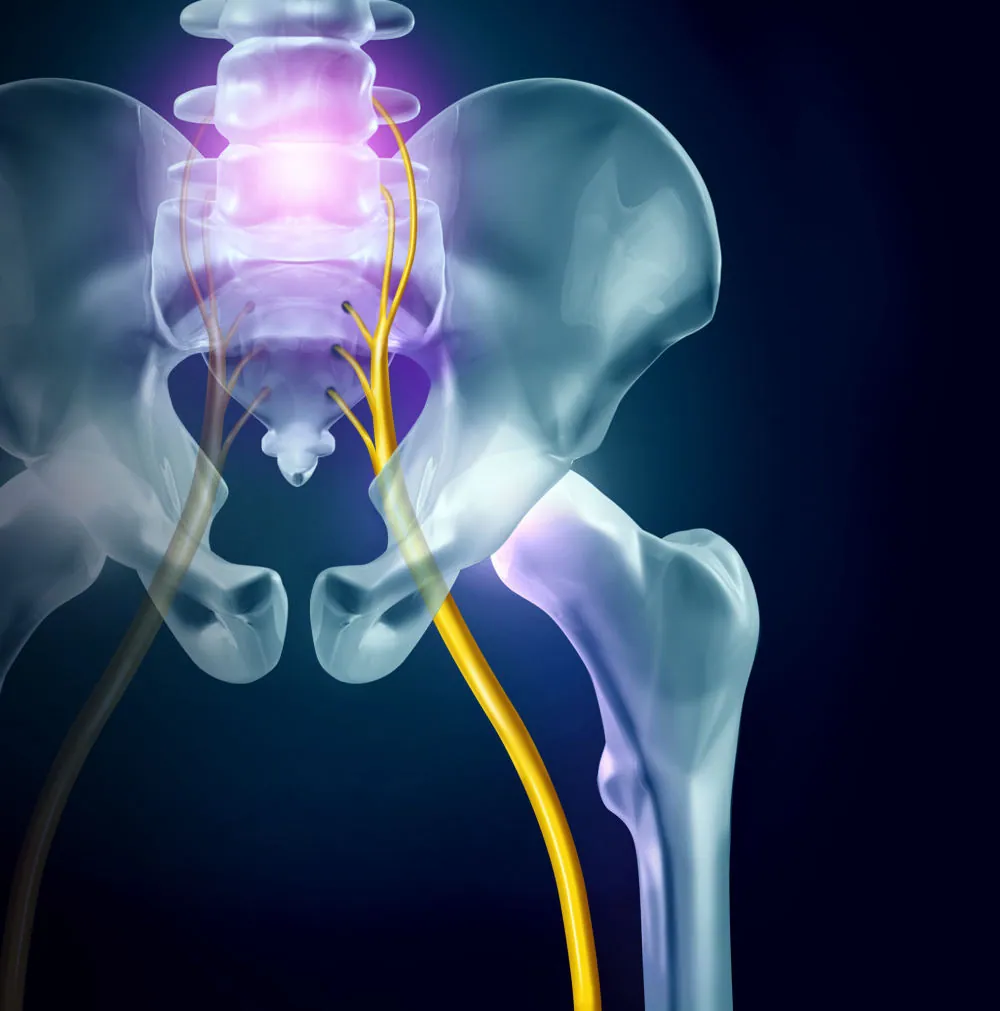
Sciatica isn’t just a back problem—it’s a nerve problem. When the sciatic nerve, the longest nerve in your body, as the National Institute of Neurological Disorders and Stroke explains, becomes pinched or irritated, it can cause debilitating pain that travels from your lower back all the way down to your feet. At Urban Chiropractic, we specialize in non-surgical solutions to decompress the nerve and provide lasting relief.

Understanding Sciatica and Nerve Health

What is Sciatica?

Sciatica occurs when pressure is placed on the sciatic nerve, typically at the point where it exits the lower spine. While many people experience mild tingling or numbness, severe cases can make walking or sitting nearly impossible.

You might feel:

  • A sharp, "electric" shock sensation that travels from the glute down the back of the thigh and calf.
  • Pain that almost always affects only one side of the body (most commonly the right side).
  • A loss of sensation or a tingling feeling in the leg, foot, or toes.
  • A feeling of heaviness in the affected leg that may cause your foot to "catch" while walking.

Usually caused by:

  • Herniated Lumbar Discs: The most common cause, where a spinal disc bulges and presses directly against the nerve root.
  • Lumbar Spinal Stenosis: A narrowing of the spaces within your spine, which puts pressure on the nerves traveling through the lower back.
  • Piriformis Syndrome: When the small muscle in the buttock (the piriformis) tightens or spasms, compressing the sciatic nerve.
  • Spondylolisthesis: A condition where one vertebra slips forward over another, pinching the nerve exit point.
How Urban Chiropractic Helps Relieve Sciatica

We create individualized recovery plans that go beyond just “cracking your back”:

  • Spinal Decompression Therapy: Creating negative pressure within the disc to "suck" the herniation away from the nerve root.
  • Flexion Distraction: A gentle, rhythmic technique used to decompress the lower spine and increase joint mobility.
  • Active Release Therapy (ART): Used to release the sciatic nerve from "muscular traps," specifically in the glutes and piriformis.
  • McKenzie Method: A specialized assessment and exercise protocol used to "centralize" leg pain back into the spine where it can be treated.

How to Prevent Sciatica Flare-Ups

  1. 1

    Avoid "Wallet Sciatica":

    Never sit with a thick wallet in your back pocket, as it tilts the pelvis and compresses the nerve.

  2. 2

    Use Lumbar Support

    Ensure your office chair has a firm curve to support your lower back and keep the nerve “open.”

  3. 3

    Core Stability

    Strengthen your abdominal muscles to take the load off your lower spine.

  4. 4

    Proper Lifting

    Always bend at the knees and hips, never the waist, when picking up heavy objects.

Frequently Asked Questions

Is Sciatica the same as a back strain?

No. A back strain involves muscles or ligaments. Sciatica involves the nerve itself. If your pain travels past your hip and into your leg, it is likely Sciatica, not just a simple strain.

Does Sciatica require surgery?

The vast majority of Sciatica cases (over 90%) can be successfully managed with conservative, non-invasive chiropractic care and physical therapy without the need for surgery.

Why does my leg hurt more when I cough or sneeze?

Coughing increases the pressure inside your spinal canal. If a disc is already pressing on a nerve, this sudden pressure spike can cause a “jolt” of sciatic pain.

Experiencing any pain or symptoms? Book your consultation now

Monday–Friday 9am–6pm · Saturday 12pm–4pm100 Town Square Pl, Suite 405, Jersey City, NJ 07310